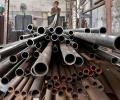
India's government is set to release its draft National Steel Policy for public consultation, aiming for over 600 million tonnes of steelmaking capacity and 500 million tonnes of consumption by 2047. The policy will also introduce a ~5,000-crore scheme to incentivise small steel producers for carbon emission reduction and address challenges like raw material availability and technological dependence.

Union Steel Minister HD Kumaraswamy has urged the Indian steel industry to adopt advanced technologies like AI, Machine Learning, and IoT to enhance global competitiveness and productivity. Speaking at a Chintan Shivir, he highlighted that digitalisation is crucial for achieving ambitious steel capacity targets by 2035 and addressing challenges such as operational efficiency, decarbonisation, and export competitiveness. The minister also emphasised how technology can improve safety and reduce downtime in steel plants.

Indian equity benchmark indices extended losses for a second consecutive session, with the Sensex dropping 143 points, driven by a sell-off in power, banking, and financial stocks, coupled with elevated crude oil prices and persistent FII selling.

Indian benchmark indices, Sensex and Nifty, ended marginally lower after recovering from sharp intraday losses, driven by cooling crude oil prices and buying interest in HDFC Bank and IT sector stocks.
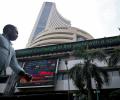
Indian equity benchmarks, the Sensex and Nifty, opened higher on Friday, driven by a strong rally in IT stocks, despite a significant overnight decline in US technology shares and broader Asian markets. Experts anticipate further market support from falling US bond yields, a strengthening rupee, and a substantial liquidity inflow following the Jio Platforms IPO allotment. Track
Worried by a spike in Chinese imports, the Indian Steel Association (ISA) plans to take up the matter with the government and seek measures to fix "trade distortions". Alok Sahay, secretary general of the group that represents the country's steel producers, said systemic changes were needed. "In order to take any trade measure, it takes a minimum of 15 months' time, due to prevalence of lesser duty rule in India, making India an easy target. "We are going to write to the government on this," he said.

Indian benchmark indices, Sensex and Nifty, saw an early rebound after significant losses, driven by value buying, though elevated oil prices and anticipation of the US Federal Reserve's policy decision tempered gains. Track Sensex, Nifty on September 16.
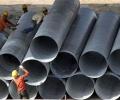
Industry demands the basic customs duty on all steel imports to be raised to 25%

Indian benchmark indices Sensex and Nifty continued their upward trend for a second consecutive day, with the Sensex gaining over 800 points, driven by strong performances from heavyweights like Reliance Industries, ICICI Bank, and HDFC Bank, alongside positive cues from easing crude oil prices and robust IT sector earnings.

The Indian banking sector is projected to experience a steady 9-13 per cent industrial credit growth in the first half of 2026, driven by capital expenditure, infrastructure development, and sectoral demand recovery, according to a Ficci-IBA survey.

India Inc's first-quarter earnings season was significantly impacted by the West Asia conflict, leading to rising costs, calibrated price increases, and margin pressures across various sectors including FMCG, automotive, steel, and cement. Companies are implementing price hikes to protect profitability, with many anticipating further escalations if input costs remain elevated.

Steel companies are witnessing margin pressures in Q2FY25 and this may persist until China sees growth recovery.

American industry groups sought punitive tariffs on Indian goods at USTR hearings, while Indian officials defended the country's manufacturing growth as demand-led and WTO-compliant.

Indian benchmark indices Sensex and Nifty recorded their third consecutive day of gains, primarily driven by an over 8 per cent surge in Bajaj Finance following strong Q1 FY27 results, coupled with significant foreign fund inflows and a dip in crude oil prices.

A Goldman Sachs report indicates that US and Indian equity markets are becoming less attractive due to lower free cash flow (FCF) yields as valuations rise, while European markets offer significantly higher yields. Concurrently, India's top-listed residential real estate developers experienced a moderation in pre-sales in Q1FY27, attributed to delayed project approvals, limited launches, and high year-ago bases, though underlying housing demand remains healthy.

Indian benchmark equity indices, Sensex and Nifty, extended their winning streak for a third consecutive day, driven by a rally in IT stocks and global cues suggesting a more accommodative monetary policy after softer-than-expected US jobs data.

Indian benchmark indices Sensex and Nifty climbed in early trade, driven by buying in blue-chip stocks like Reliance Industries and ICICI Bank, alongside a notable cooling in crude oil prices.

India's fresh investment plans in Q1FY27 surged 71 per cent to 14.77 trillion, primarily driven by four large nuclear power projects worth 6.5 trillion, according to investment monitoring firm Projects Today. Excluding these nuclear projects, fresh investment plans actually declined 4.27 per cent quarter-on-quarter.

India's leading passenger vehicle manufacturers are significantly increasing investments and factory capacities, alongside planning major product launches for FY27, driven by strong confidence in sustained domestic demand growth despite global geopolitical tensions and supply chain risks.
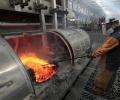
In the first two months of the current fiscal, Indian exports of finished steel reportedly grew by almost 76 per cent on a YoY basis and China alone accounted for close to 60 per cent of the increase.

Steel firms brace for good times on the back of better demand.

Stock markets closed higher for the second straight session on Tuesday, driven by gains in bank, IT and capital goods shares.

India, the world's fourth largest economy, is set to maintain the 'goldilocks' phase with tailwinds of good growth, low inflation and robust banking performance as well as reform initiatives poised to sustain the economic pace witnessed during 2025.

FDI inflows into India are expected to register robust growth in 2026, supported by strong macroeconomic fundamentals, big-ticket investment announcements, sustained efforts to improve the ease of doing business, and a new generation of investment-linked trade pacts.

New Delhi will substantially reduce tariffs on industrial and agricultural goods while continuing to protect sensitive sectors. Tariffs on some agricultural products that are not traditionally considered sensitive will be brought down to zero, while in the case of relatively sensitive items, duties will be reduced in a graded manner and quotas will be imposed.

From the Sensex pack, Asian Paints, Tech Mahindra, Tata Consultancy Services, Bajaj Finserv, Adani Ports, HCL Technologies, Bharti Airtel, Infosys, Trent, Reliance Industries, UltraTech Cement, Sun Pharmaceuticals, Eternal, Titan and Bajaj Finance were the gainers. On the other hand, Tata Steel, Tata Motors Passenger Vehicles, Tata Motors Commercial Vehicles, Bharat Electronics, Kotak Mahindra Bank and PowerGrid were the laggards.

Among Sensex firms, Bajaj Finserv, Bajaj Finance, Tata Steel, Reliance Industries, Sun Pharma, Tata Motors Passenger Vehicles, Axis Bank and Infosys were among the major gainers. Bharti Airtel and Asian Paints emerged as the laggards from the pack.

'Only four or five original companies remain; the rest have been replaced every decade as sectors evolve or leadership shifts.' 'Companies that fail to adapt -- like many textile mills from the 1970s and shipping firms from the 1980s -- disappear.' 'Benchmark indices reward those who reinvent themselves in line with economic demands.'
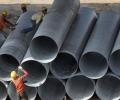
The festive season will mean business for the steel industry as it is the time when automotive and consumer appliance companies bump up demand to prepare for higher sales, experts have said. Ranjan Dhar, chief marketing officer at ArcelorMittal Nippon Steel India (AM/NS India), said that bookings by auto and consumer appliance industries are 20 per cent higher ahead of the festive season compared to last year. "While this could be for a couple of months, it could normalise later at approximately 10 per cent," he said.

It was August 2007. Tata Steel was turning 100. Jamshedpur, its hometown, had an air of celebration. The line-up for the special event included the launch of Air Deccan's commercial flight connecting Kolkata and Jamshedpur, and release of Russi Lala's new book, Romance of Tata Steel. There was also the screening of The Spirit of Steel, a 20-minute documentary directed by Zafar Hai showcasing Tata Steel's legacy, and a corporate anthem penned by Javed Akhtar and composed by Shankar, Ehsaan and Loy.

Most pharma shares dropped, dragging the BSE Healthcare index down by 2.14 per cent after Trump's move to impose 100 per cent import tariffs on pharmaceutical drugs from October 1. Wockhardt shares tanked 9.4 per cent.

Among Sensex firms, Eternal, Infosys, Asian Paints, HDFC Bank, Bajaj Finserv and Titan were the major gainers. However, Tata Steel, Tech Mahindra, Adani Ports and Bharat Electronics were among the laggards.

Part-I of this three-part series dives into Delhi-NCR's SPR, Sohna, Dwarka Expressway, and Jewar Airport leading the charge.

Indian auto component exporters may suffer a hit of 2,700 crore to 4,500 crore on their earnings after the imposition of steep US tariffs on key automotive parts, credit rating agency ICRA said in a note on Monday. The new 25 per cent tariff on engines, transmission, electrical components, and other auto parts may moderate the overall auto component industry's revenue growth to 6-8 per cent in 2025-26 (FY26), down from an earlier projection of 8-10 per cent.

Russia's war on Ukraine has sent steel prices soaring to its highest levels in the domestic market since November 2021. But there is little cheer in the industry. That's because input costs are spiralling out of control, leaving the big boys nearly as high and dry as the small, medium and secondary steel producers. Russia and Ukraine are major providers of steel and raw materials to the world.
Fitch Ratings on Monday said India's steady GDP growth outlook, improved banking sector's financial health and expected interest-rate cuts in 2025 will support credit access for corporates in FY26.

Tata Steel delivered one of its best financial performances ever in the third quarter of the current financial year, and surpassed its deleveraging target of $1 billion. In an interview, Koushik Chatterjee, executive director and chief financial officer, Tata Steel, tells Ishita Ayan Dutt that the company will continue to focus on deleveraging but profitable and value-added growth will be equally important.

India Ratings expects long products demand growth to be sharp, supported by a demand push from the government-led infrastructure investments in affordable housing, railways, rural electrification and road networks.

Siemens's share price has lost ground in the past few sessions following weak management commentary. The management indicated challenges to the growth outlook due to stagnant private capex and concerns over semiconductor shortages for digital industries. Government infra-spending may regain momentum from January 2025.

Brokerages expect a further slowdown in Indian firms' revenue and earnings growth in Q4FY25, following low single-digit growth in the preceding three quarters, as factors like weak consumer demand and credit growth linger on.
